Yeguada Almenara Alta: A Family Tradition
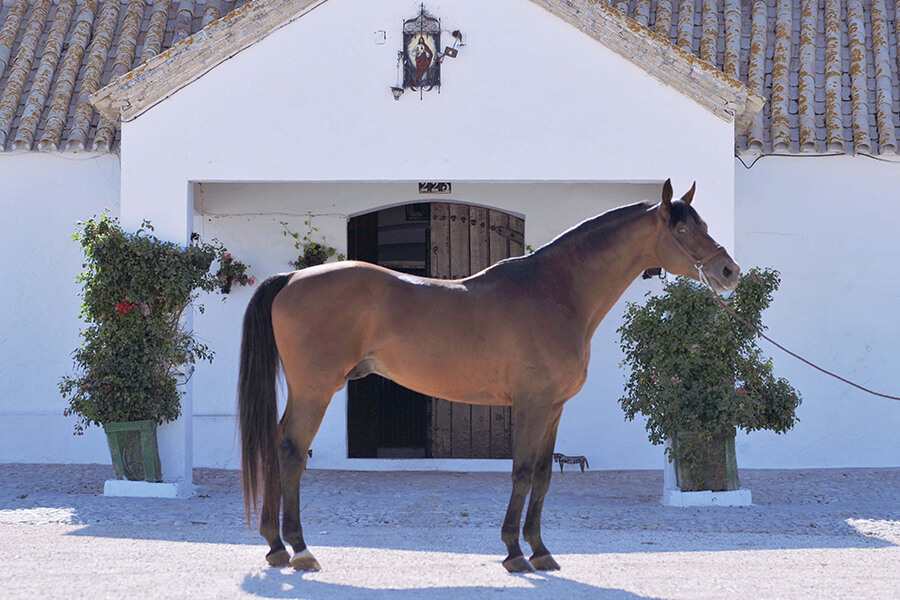
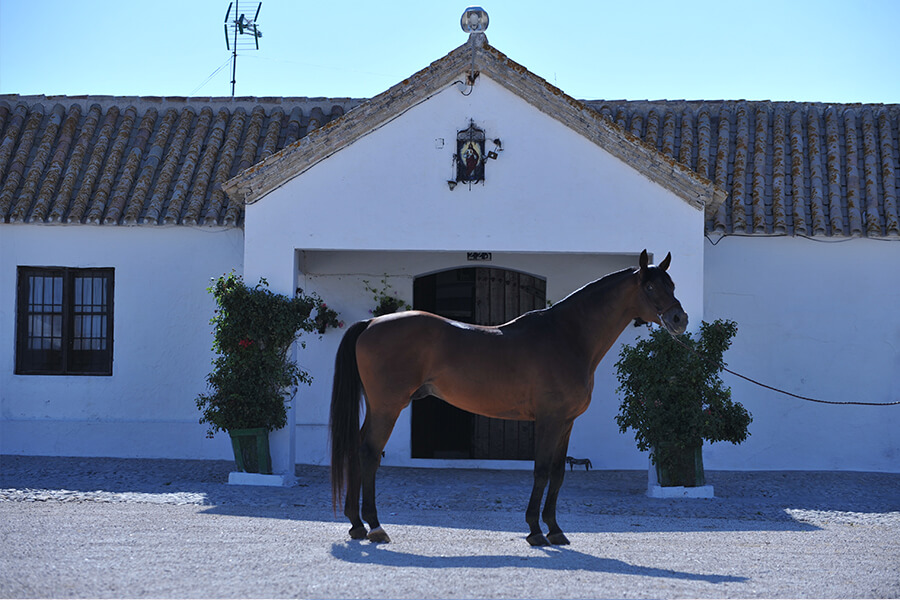
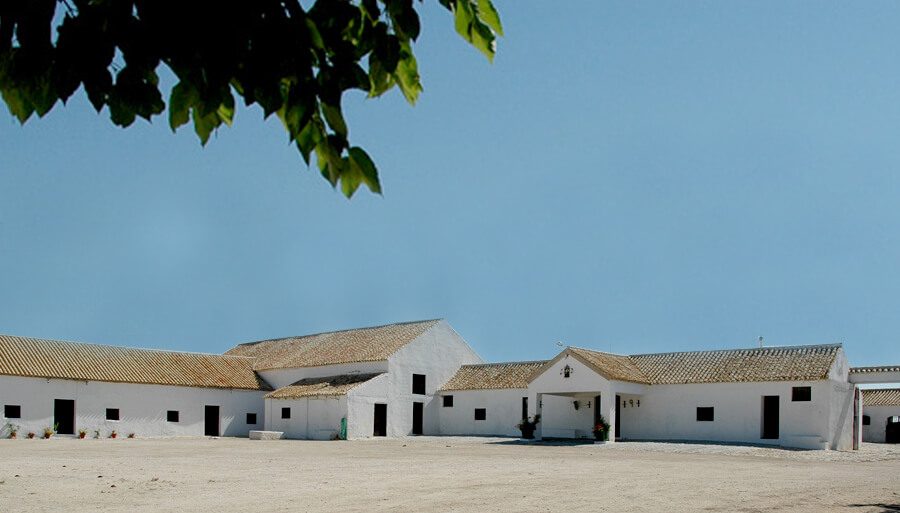
Yeguada Almenara Alta was established in the mid-1970s as a result of the division of the Soto Domecq brothers’ livestock. Between the Sevillian towns of Osuna and Écija, opposite the Military Stud Farm of Las Turquillas, lies the Villar de Ajenjo estate, where Almenara Alta’s Anglo-Arab horses are bred. Today, this estate is the only part that remains from that division of Puerto Hermoso.
In 1910, Fernando de Soto y González de Aguilar Ponce de León (Écija, 1876), Count of Puerto Hermoso and Marquis of Arienzo, married to María del Carmen Domecq y Núñez de Villavicencio, began breeding Anglo-Arab and Anglo-Hispano-Arab horses at the Romanito estate in Jerez de la Frontera (Cádiz). Fernando de Soto’s first mares came from his brother-in-law, the Marquis of Domecq, Pedro Domecq y Núñez de Villavicencio, and from the Military Stud Farm of Jerez de la Frontera (Cádiz), branded with the iron mark of the Marquis of Arienzo.
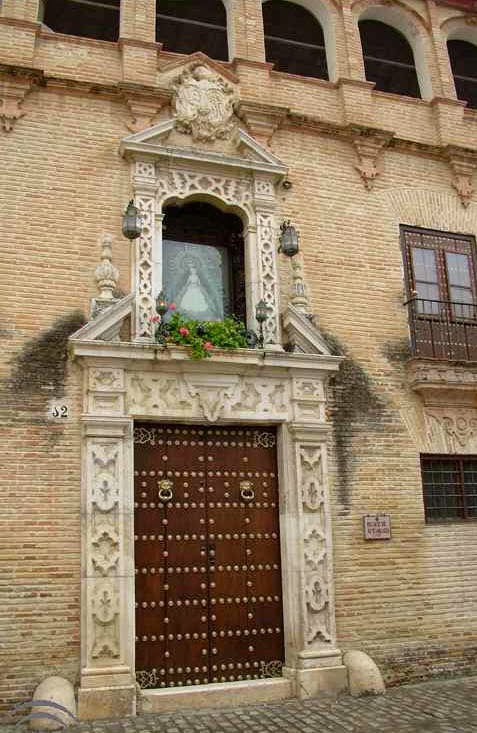
The Beginnings of Puerto Hermoso
On January 26, 1940, Fernando de Soto, Count of Puerto Hermoso and Marquis of Arienzo, passed away, and his nine children inherited the stud farm, registering it under the name of the Soto Domecq brothers, although it was already publicly known by the name Puerto Hermoso. The Soto Domecq brothers continued branding the horses with the iron mark of the Marquis of Arienzo, and all the animals remained at the Romanito estate. In the mid-1950s, they decided to move them to the Sevillian town of Écija, to the Villar de Ajenjo estate.
Later, in 1975, the stud farm was divided among Guadalupe Díez y Sierra, widow of Manuel de Soto y Domecq; Carmen de Soto y Domecq; María del Carmen de Soto y Colón de Carvajal; and Juan Pedro de Soto y Domecq. As a result, in volume thirty-eight of the Anglo-Arab studbook (years 1975, 1976, 1977, 1978), it was already recorded which mares from the Soto Domecq brothers’ stud farm were transferred to and registered under the name of Juan Pedro de Soto Domecq.
A New Stage in Anglo-Arab Horse Breeding
Gradually, Juan Pedro de Soto y Domecq (Jerez de la Frontera, 1907), Duke of Almenara Alta, established his own stud farm, dedicating himself exclusively to the breeding of Anglo-Arab horses. Following the death of Juan Pedro Soto Domecq on August 19, 2004, his wife, María Soledad Martorell y Castillejo, took over the management of Yeguada Almenara Alta together with their children Juan Pedro, Fernando, and Manuel de Soto y Martorell.
Later, in 1975, the stud farm was divided among Guadalupe Díez y Sierra, widow of Manuel de Soto y Domecq; Carmen de Soto y Domecq; María del Carmen de Soto y Colón de Carvajal; and Juan Pedro de Soto y Domecq. As a result, in volume thirty-eight of the Anglo-Arab studbook (years 1975, 1976, 1977, 1978), it was already recorded which mares from the Soto Domecq brothers’ stud farm were transferred to and registered under the name of Juan Pedro de Soto Domecq.
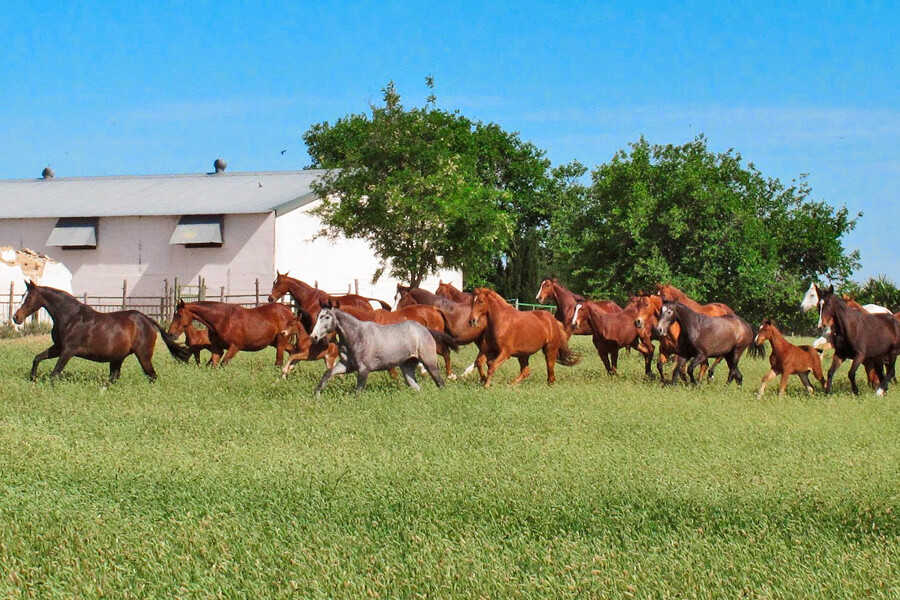
Almenara Alta and Competition
Many horses and mares have stood out throughout the history of the stud farm. Among them, special mention should be made of the grey Anglo-Arab “Lector II” (“Mig” PSI and “Lectora” by Magicien II PSI), born on March 7, 1969, at the Soto Domecq brothers’ stud farm, who went on to become Spanish Champion in national-bred horses and in team competitions. He was also a winner of international events, including the Grand Prix of the Club de Campo and RACE. He won the silver medal at the Prince of Asturias Trophy and claimed more than sixteen trophies in show jumping competitions in the “A” and “B” categories.
Also worthy of mention is the horse “Atómico”, who was Spanish Champion ridden by Ángel Alonso Martín; as well as “Novelista II”, who was sold to Portugal to Mr. Malta de Acosta and went on to become part of the national team. “Espartaco”, born on April 2, 1958, was sold to Germany, where he stood out as an outstanding show jumper under the rider Hauke Schmidt, achieving more than fifty international awards. “Dictador II”, born on February 1, 1959, became Dressage Champion ridden by Mr. Heredia. In the discipline of Acoso y Derribo, the mare “Jandilla” distinguished herself, becoming Spanish Champion in 1969, Runner-up in 1970, and winner of the competition held in Jerez de la Frontera (Cádiz) in 1972.
From 2007 to the present year, 2019, the mares of Almenara Alta have won the Champion of the Breed title in every edition. In 2017, Sari was also proclaimed “CHAMPION OF CHAMPIONS”, the highest award granted to a mare at the EQUISUR fair in Jerez, among all breeds.
- 2007 Hacendosa (Fusain du Defey x Addis Abeba by Lucus PSI)
- 2008 Baturra (Zafarrancho x Lancera by Farnesio)
- 2009 and 2014 Gardenia (Vlan de Vergoignan x Baturra by Zafarrancho)
- 2010 Valencia (Quorum x Otomana by Lucus PSI)
- 2011 Orgullosa (In Blue x Hacendosa by Fusain du Defey)
- 2012 Original (In Blue x Filosofa by Conquista)
- 2013 Palencia (Vlan de Vergoignan x Valencia by Quorum)
- 2015 Rima (Ultra du Gue x Filosofa by Conquista)
- 2016 Quintana (Quatar du Plape x Gardenia by Vlan de Vergoignan)
- 2017 Sari (Hondureño x Española by Quastor)
- 2018 Quimera (Quatar de Plape x Filosofa by Conquista)
- 2019 Original (In Blue x Filosofa by Conquista)
Likewise, in 2014 Rima (Ultra du Gue x Filosofa by Conquista) was champion of the Anglo-Arab Breeding Selection Trials, and in 2015 Tiza (In Blue x Filosofa by Conquista) was the top-ranked mare in the Anglo-Arab PSR, followed in 2016 by Uva de Écija (In Blue x Valencia by Quorum).
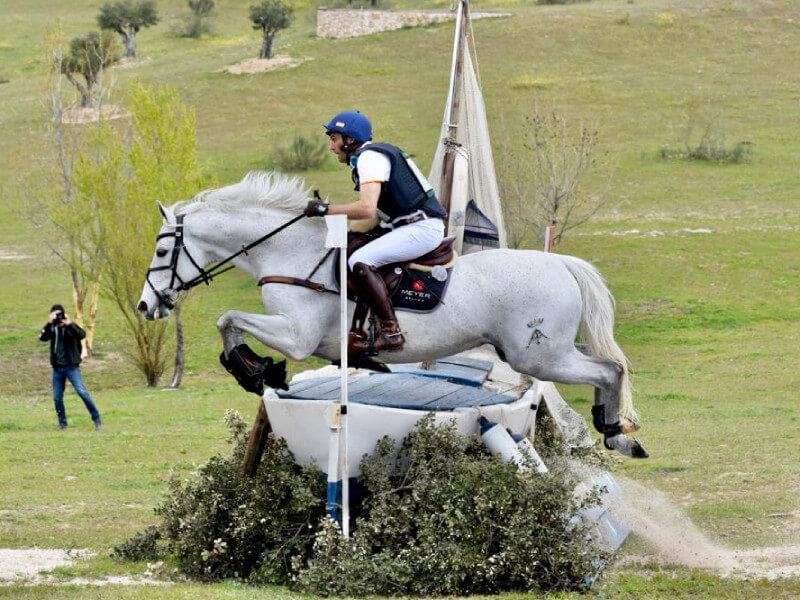
Ingrato began to stand out in 2008 and 2009, being named Breed Champion at Equisur. In 2010, the stallion Ingrato 31.34% (Fusain du Defey x Baturra by Zafarrancho) achieved a major success by winning the Absolute Spanish Championship in Eventing. In 2011, he won the H.M. The King’s Cup in Eventing. In 2017, he was presented once again at the Equisur show, winning the Breed Champion award and placing first in the category for horses over six years of age.